Skip to content
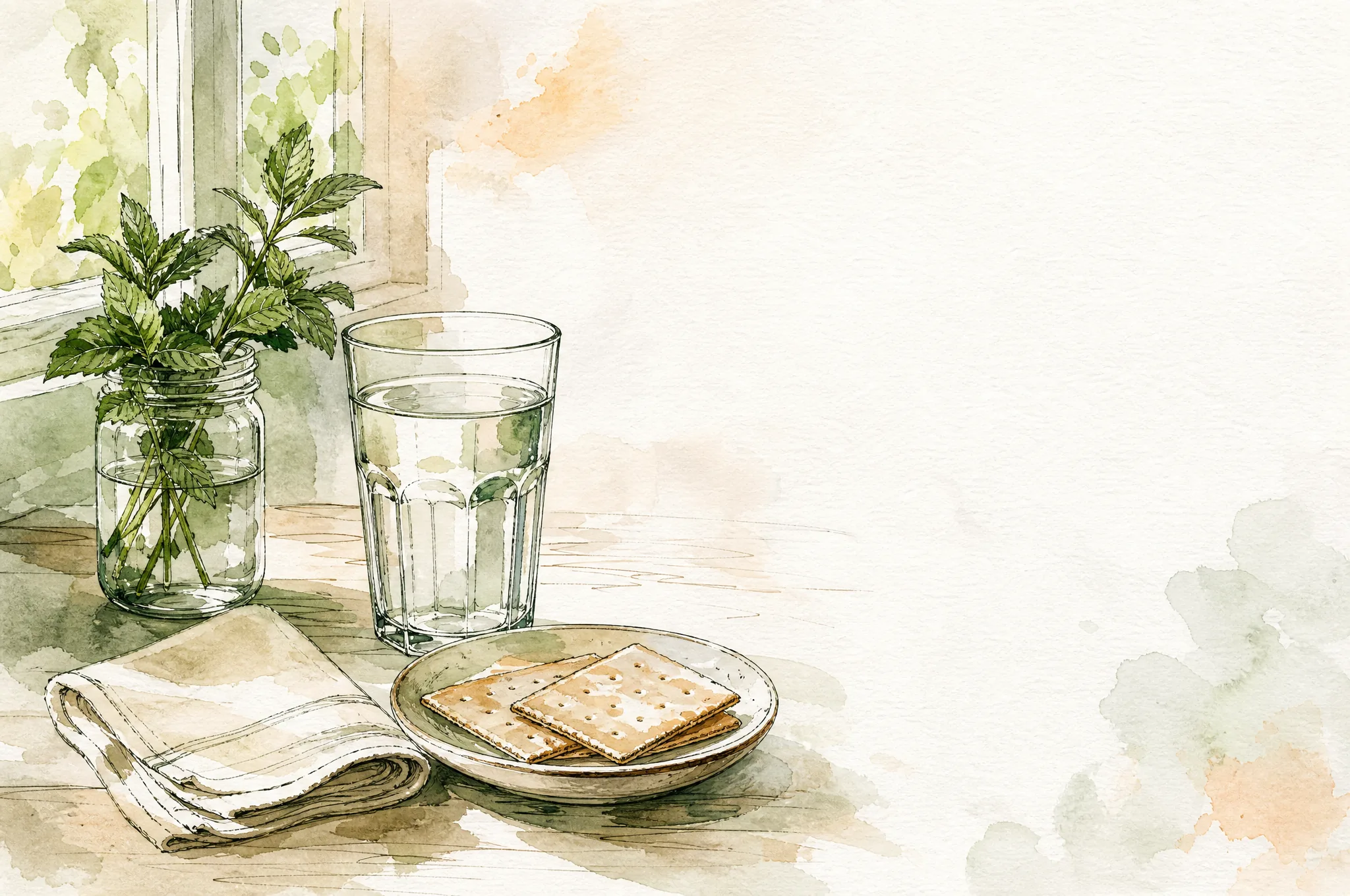
Ink-wash still life of a glass of water and a few plain crackers on a small plate at the edge of a kitchen table, barely touched.
Eating

Eating enough when you are not hungry at all

A way to check one day of eating on paper instead of guessing at it, the question at the table that separates not wanting food from not being able to eat, and the two things that turn a quiet appetite into a call rather than another week.
Dr. Arjun Patel · Sep 8, 2026 · 6 min

This article is general information about medical weight care. It is not medical advice and it is not a substitute for care from a licensed clinician who knows your history. Compounded medications are not FDA-approved and are not reviewed by the FDA for safety, effectiveness or quality. NicoCares is not affiliated with, and is not endorsed by, the makers of any branded medication named here. Individual results vary, and a physician may decide that treatment is not appropriate for you.

You have eaten one proper meal in three days, and not because you were being strict — food is simply not calling. Behind that sits a question you cannot answer from the inside: is a small intake fine for now, or is it the thing to act on? There is a printed floor for what a day needs, and there is a line between not wanting food and not being able to eat it. Answer the second at tonight's meal and you will know which of the two you have.

Not being hungry is not, by itself, a reason to call anyone. Eating well under what a day needs, several days running, is worth acting on. And being unable to eat rather than uninterested is a different thing again: the symptoms of a stomach emptying too slowly may include feeling full soon after starting a meal, feeling full long after eating one, nausea, vomiting, too much bloating, pain in the upper abdomen and poor appetite. Poor appetite is on that list too, so an appetite that has gone flat alongside any of the others belongs on a phone call rather than at the table.

What counts as eating enough

Eating enough is easier to check on paper than to feel. Keeping a food diary covering at least 24 hours is the printed home-care step for a decreased appetite, and doing it from memory for the day just gone takes a minute. Then look at the page for two things.

The first is protein. The daily recommended intake of protein for healthy adults is 10% to 35% of your total calorie needs, and one gram of protein supplies four calories, which puts the bottom of that range at about 50 grams of protein on a 2,000-calorie day. Tea, toast and a yogurt does not reach it. That is the kind of day the diary is there to catch.

The second is coverage. A healthy pattern is built on whole, nutrient-dense foods, including protein, dairy, vegetables, fruits, healthy fats and whole grains, so count how many of those six appeared at all and take the count with you. A day built out of one or two of them runs short on things hunger was never going to tell you about, whatever the calorie total came to — and the count is a fact a clinician can act on where "I have not been eating well" is not.

Not wanting food, and not being able to eat

Not wanting food and not being able to eat leave the same full plate, and they separate in the first few bites. Not wanting food means you sit down, start, and find the whole prospect uninteresting — the meal is possible and unappealing. Not being able to eat means the meal stops you: full three bites in, still full hours after the last one, queasy, or bringing it back up.

Test it once, on purpose, at a meal you would otherwise skip. Put a small plate in front of you at a time you would normally eat, and start. Finishing it without difficulty means appetite is the whole story, and the answer is scheduling. Stopping because you cannot continue is the version to report, in those words: full soon after starting, full long after eating, nausea, vomiting.

The two lead different places. One is handled at your own table this week; the other is a symptom your prescriber needs to hear, and it changes what they do.

What to change first, and when it becomes a call

Change the shape of the day before you change anything on the plate: several small meals through the day, and foods you actually like in place of the ones you have decided are correct. When wanting food has gone quiet, waiting to want it is what produces the three-day gap, so eat at set times and let the amount be small.

Two things turn this into a call rather than another week. One is an appetite change you think comes from a medicine you take, where the printed instruction is to talk it over with your provider rather than stop taking it on your own. The other is a quiet appetite arriving alongside signs of depression, which is named as its own reason to contact a provider.

Get medical care right away for severe pain or cramping in your abdomen, red blood in your vomit or vomit that looks like coffee grounds, sudden sharp stomach pain that does not go away, vomiting for more than an hour, feeling extremely weak or fainting, difficulty breathing, or fever. If the problem is that nothing at all is staying down, not being able to keep fluids down runs on a clock of its own.

The written day, and what goes on it

  • Write down everything you ate and drank since this time yesterday, from memory, rather than starting a fresh log tomorrow.
  • Count how many of the six appeared: protein, dairy, vegetables, fruits, healthy fats, whole grains. Four of the six missing is your answer.
  • Put a small plate in front of you at a normal mealtime and start eating. Notice whether you stop because you are finished or because you cannot continue.
  • Move to several small meals at set times, built from foods you like rather than foods you approve of.
  • If the meal stops you, tell your prescriber this week, using the words: full soon after starting, full long after eating, nausea, vomiting.
  • If you think a medicine is behind it, ask your provider before you change how you take it.

Your size, your other conditions and what your care is aimed at all move the number, and the person holding all three is the one prescribing for you. What the written day does is turn a vague sense of eating badly into something they can act on inside one appointment. Take the page with you.

Questions people ask

Do smoothies and shakes count toward the day?
Yes. Anything you swallow is intake, and the two checks work the same way on a glass as on a plate: the protein it carries counts toward the day's total, and the food groups in it count toward the six. A day made entirely of drinks tends to come up short on coverage rather than on calories.
The weight is coming off faster now that I am barely eating. Is that a problem?
It is worth reporting rather than sitting on. Your prescriber may act on an intake far under the floor, and the useful thing to bring is the day on paper — what you actually ate over 24 hours — rather than an impression of eating badly.
How long is too long to go with almost no appetite?
No number of days is printed anywhere as the cut-off. What is printed is the company it keeps: a quiet appetite arriving with signs of depression, one you think comes from a medicine you take, or a meal that physically stops you. Any of those makes it a call whatever the calendar says.
Should I take a multivitamin if I am eating very little?
Ask the person prescribing for you before you add one, because it depends on what your day is actually short of and on the rest of your care. A supplement also does nothing about protein or calories, so it does not answer the part of this the food diary is checking.

Not sure where to start? Let the intake guide you.

Reviewed by Dr. Grace Lin
Written by

Dr. Arjun Patel

A NicoCares physician. Illustrative demo content.
More in the Journal

Keep reading

An ink-wash drawing of a tall glass of water with a sprig of mint, standing on a plain kitchen table beside a folded cloth.
Eating

When constipation stops being a nuisance and starts being worth a call

The printed threshold you can hold your own pattern against, why smaller meals move a bowel habit when nothing else has changed, and the two lists of symptoms — one that means call your provider this week, one that means be seen today.Dr. Grace Lin · Sep 8, 2026 · 6 min read
Ink-wash still life of a glass of water and a few plain crackers on a small plate at the edge of a kitchen table, barely touched.
Eating

Eating enough when you are not hungry at all

A way to check one day of eating on paper instead of guessing at it, the question at the table that separates not wanting food from not being able to eat, and the two things that turn a quiet appetite into a call rather than another week.Dr. Arjun Patel · Sep 8, 2026 · 6 min read
Ink-and-wash interior: a woman sitting by a window with a mug of tea, a wall calendar beside her with several dates circled unevenly across two months.
Life stage

Irregular periods for years, and whether to settle it before you start

The three diagnostic features and how many of them you need, the blood tests that rule other conditions out first, and the one thing to settle at the same appointment whatever the result turns out to be.Dr. Ruth Adler · Sep 8, 2026 · 6 min read
Collage of a hospital corridor: a gowned patient on a trolley waiting outside a set of double doors, two staff in scrubs talking beside a wall-mounted clock.
Treatment

Telling a surgeon, a dentist or an endoscopy team what you take

Three separate teams decide things about you between the booking and the date, and none of them automatically knows what you take. Here is who to tell, when, and what changes if the first anyone hears is on the morning.Dr. Ruth Adler · Sep 5, 2026 · 6 min read
An ink-and-watercolor illustration of a couple on a hospital bed: a woman in a gown holds a swaddled newborn in a knitted cap against her chest, and a man leans his head against hers, both with their eyes closed.
Life stage

Planning a pregnancy, finding out you already are, and what the pill does in the meantime

Which contraceptive instruction is printed for which medicine, how far ahead of trying to conceive one of the two labels tells you to stop, and what to say the day a test comes back positive.Dr. Ruth Adler · Sep 8, 2026 · 7 min read
An ink-and-watercolor illustration of a clinician in a white coat with a stethoscope, mid-sentence at a desk, one hand raised as she talks to an open laptop during a video visit.
Treatment

The pain on the right side when weight is coming off fast

What connects fast weight loss to gallstones, what a gallbladder attack feels like next to bad indigestion, and the two printed lists that separate a message in the morning from an emergency room tonight.Dr. James Whitfield · Sep 8, 2026 · 7 min read