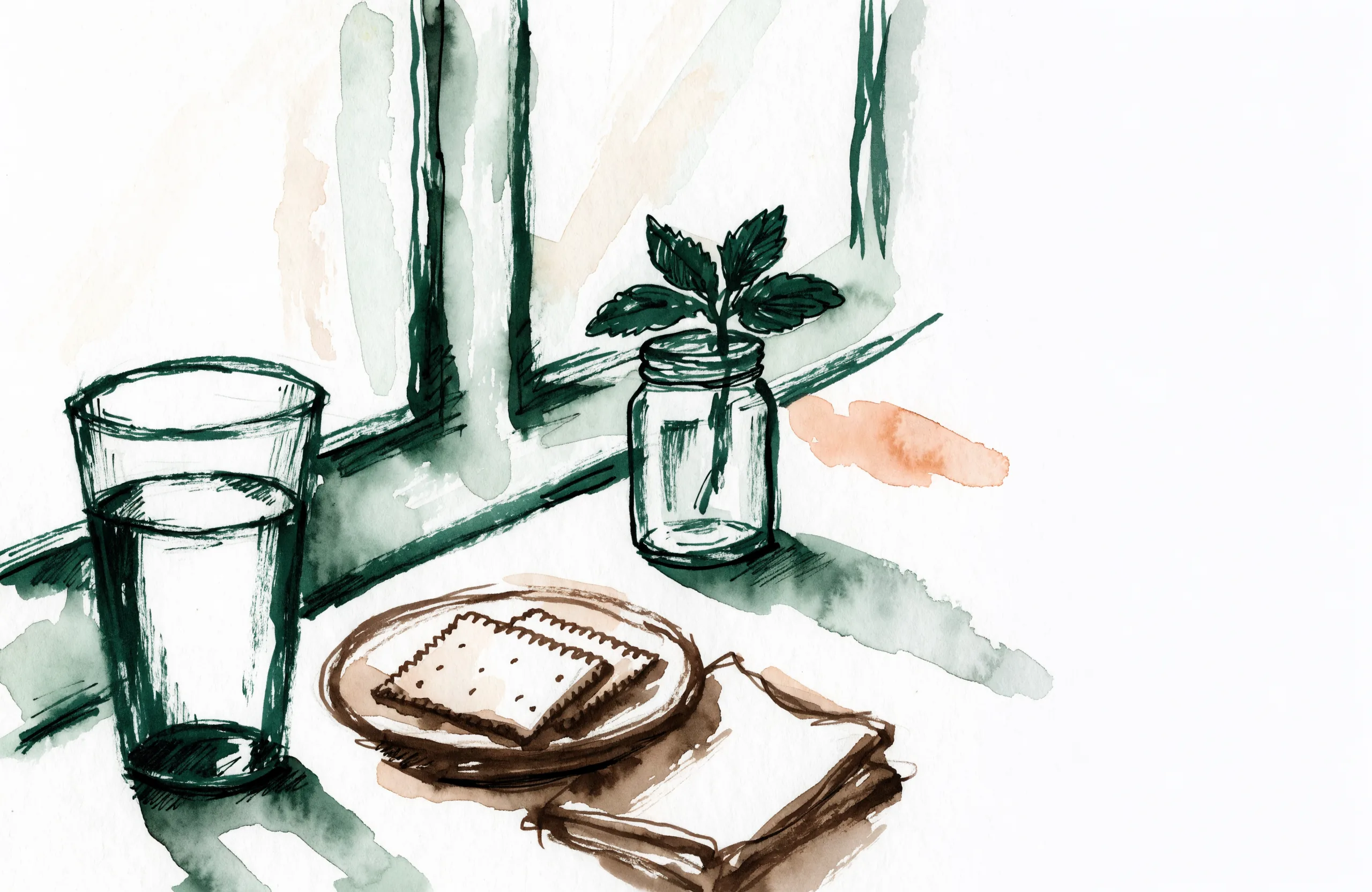
There are four bottles on your kitchen counter: something for your thyroid, something for blood pressure, and two for diabetes. Four separate appointments put them there, over years, and none of those prescribers has met the others. Now a fifth clinician is about to add something new, and nobody has asked you for more than the names.
Your own list sorts into two parts here: the part that changes nothing, and the part that needs a phone call before you start. Sort it at that counter and you will know which prescriber to ring and what to ask them.
Bring the whole list, including anything you buy without a prescription. Two things on it decide whether anything else has to happen. A medicine you swallow can be absorbed differently while your stomach is emptying more slowly than it used to, which matters for the small number of drugs that have to stay inside a narrow range in your blood. And insulin, or a diabetes tablet that works by pushing your pancreas to release more insulin, raises the risk of your blood sugar dropping low. Neither is a reason to change anything on your own. Both are a reason to tell the prescriber who wrote that other prescription, before your first injection rather than after it.
What a slower stomach does to a tablet you swallow
A tablet you swallow reaches your blood by way of your stomach, so a stomach that empties more slowly can move when that tablet peaks and how high the peak goes. Slowing the stomach is part of how these injections work, and that has the potential to change the absorption of medicines you swallow alongside them. The effect is largest at the start and smaller once you have been on it a while.
For most of what people take, that changes nothing anyone would notice. It matters for a smaller group: the medicines where the amount in your blood has to stay inside a narrow range, because too little stops working and too much causes harm. A blood thinner is the example printed in the labeling, along with an instruction that people taking one be monitored while taking both. The label does not say what that monitoring is or how often — the prescriber who wrote the blood thinner decides that. Your part is telling them you have started, so whatever they already do gets done by someone who knows what changed.
If your contraception is something you swallow, it sits inside this same interaction, and what a swallowed contraceptive needs when you start is a separate question with a separate answer.
Which of your medicines can drop your blood sugar
Insulin can drop your blood sugar, and so can the diabetes tablets that work by pushing your pancreas to release more insulin — sulfonylureas and meglitinides. Taking one of those alongside a weekly weight injection carries a printed warning: the combination raises the risk of a low, including a severe one. Those two kinds of diabetes tablet and insulin are the ones the printed warning singles out; whether anything else on your own list belongs beside them is a question for the prescriber who wrote it.
Low means a reading below 70 mg/dL for many people with diabetes. Among the ways it announces itself are feeling shaky or jittery, hungry, tired, dizzy, confused or irritable, a fast or irregular heartbeat, a headache, and trouble with your vision or your speech. If you own a meter, this is the moment it is for.
NIDDK's printed rule for treating a low is to eat or drink 15 to 20 grams of glucose or carbohydrate right away, wait 15 minutes, and check again. That rule was written for people with diabetes, so the prescriber who wrote your diabetes medicine is the one to confirm it fits you and to say what your own readings mean.
A low that has gone as far as a seizure or a loss of consciousness is past what food fixes. Glucagon is the printed treatment for that, and whoever is with you calls 911 right away after giving it. Anyone who lives with you can be shown both halves before there is any need for them.
What to hand the pharmacist, and which prescriber to tell
Hand over the whole list, not the part that seems relevant. Everything counts: prescription and over-the-counter drugs, dietary supplements, vitamins, botanicals, minerals and herbals, and the foods you eat with them. You can also ask the counter for the package insert for each prescription you take, which costs nothing.
If your prescriptions come from one pharmacy, ask them to print what they have dispensed to you. That printout is more complete than the list you can recall while standing at a desk, and it is worth photographing and keeping on your phone.
Then the calls. The clinician prescribing for weight gets the whole list, at the first appointment. The prescriber who wrote your diabetes medicine hears from you before the first injection rather than after it, because what to do about a diabetes prescription is that prescriber's decision and not one to work out at the kitchen table. Anyone who prescribed you a medicine that needs regular blood tests to stay in range gets the same call, for the same reason.
Before you start
- Ask your pharmacy to print everything it has dispensed to you, and photograph the printout.
- Add what the pharmacy cannot see: anything bought over the counter, plus supplements, vitamins and herbals.
- Give that whole list to the clinician prescribing for weight.
- Call the prescriber who wrote your diabetes medicine and say what you are starting.
- Make the same call to anyone who prescribed you a medicine that needs regular blood tests to stay in range.
- If you take insulin or a tablet that makes your pancreas release more insulin, ask that prescriber what a low would look like for you and how they want it handled.
The likeliest outcome is that nothing on your list changes at all. That is still worth hearing from the prescriber who wrote it rather than assuming, because which medicine, what it treats and how your readings have been running are three things only they see together — and the same list read six months from now, after your appetite and your eating have moved, may not come back with the same answer.