Your knees hurt when you stand up, and somewhere in the last year a clinician, a relative or a search result told you to move more. The knees are the reason you stopped, so the advice comes back as the thing you already tried and could not do. The recommendation written for a joint that already hurts is narrower than "move more": it names the activities, the length of a first session, and the point at which pain stops being ordinary.
You can pick what to do this week without waiting for anything to come off first, and you can tell the soreness that comes with starting from the pain that earns an appointment.
Movement is the recommendation for a painful joint rather than the reward for fixing one. Physical activity is safe for people with arthritis. It lowers joint pain and improves function instead of costing either. What changes for a knee that already hurts is the menu and the size of the first session: low-stress activities, and a first go that can be five minutes long. Some pain, stiffness or swelling after starting anything new is expected and eases off. Pain that does not ease off, or that is severe, is the version that belongs in front of a clinician.
What activity does to a sore joint
Activity lowers joint pain and improves how the joint works. That is the reverse of what a knee that hurts leads you to expect. Physical activity can decrease pain for those with osteoarthritis, and exercising can reduce joint pain and stiffness and increase flexibility, muscle strength, and endurance. Muscle around a joint carries load the joint would otherwise carry alone, and muscle answers to what you do this month.
Early soreness is where a new plan usually stops, because it feels like an injury rather than like starting. It is normal to have some pain, stiffness or swelling after starting a new physical activity program, and arthritis joint pain from activity gets better over time. Where it does not get better, contacting a health care provider is the next move rather than pushing through, and severe pain or severe symptoms is a call on its own.
Weight and activity act on the same joint, and neither one waits for the other. Carrying less does reduce the stress on a weight-bearing joint, and for a knee or a hip it can lower pain and increase how far the joint moves. Doing them in order — the weight first, the walking afterward — is what produces the year in which neither happens.
Activities that count when the standard ones hurt
Activities that put no or low stress on the joints count in full, and it is a short enough list to pick from while standing: brisk walking, cycling, light gardening, dancing, tai chi, swimming, and water exercises such as shoulder shrugs and ankle circles in the water. Water is worth trying first if standing is the problem, because exercising in water lowers the stress on the joints while you do it.
A good choice is one that is enjoyable, easy to get to, causes no or little pain, and is one you will still be doing in a month. Intensity is not on that list. An activity that fails the pain test is not a test of your resolve either; it is the wrong activity, and six others are sitting on the same line.
Length is where this differs most from the routine you gave up. Physical activity can be broken into short sessions, and just 5 or 10 minutes at a time is beneficial, with five minutes named as somewhere to start. Difficulty then rises in small amounts as the body gets used to an activity, which is a different instruction from adding time because a week has gone by.
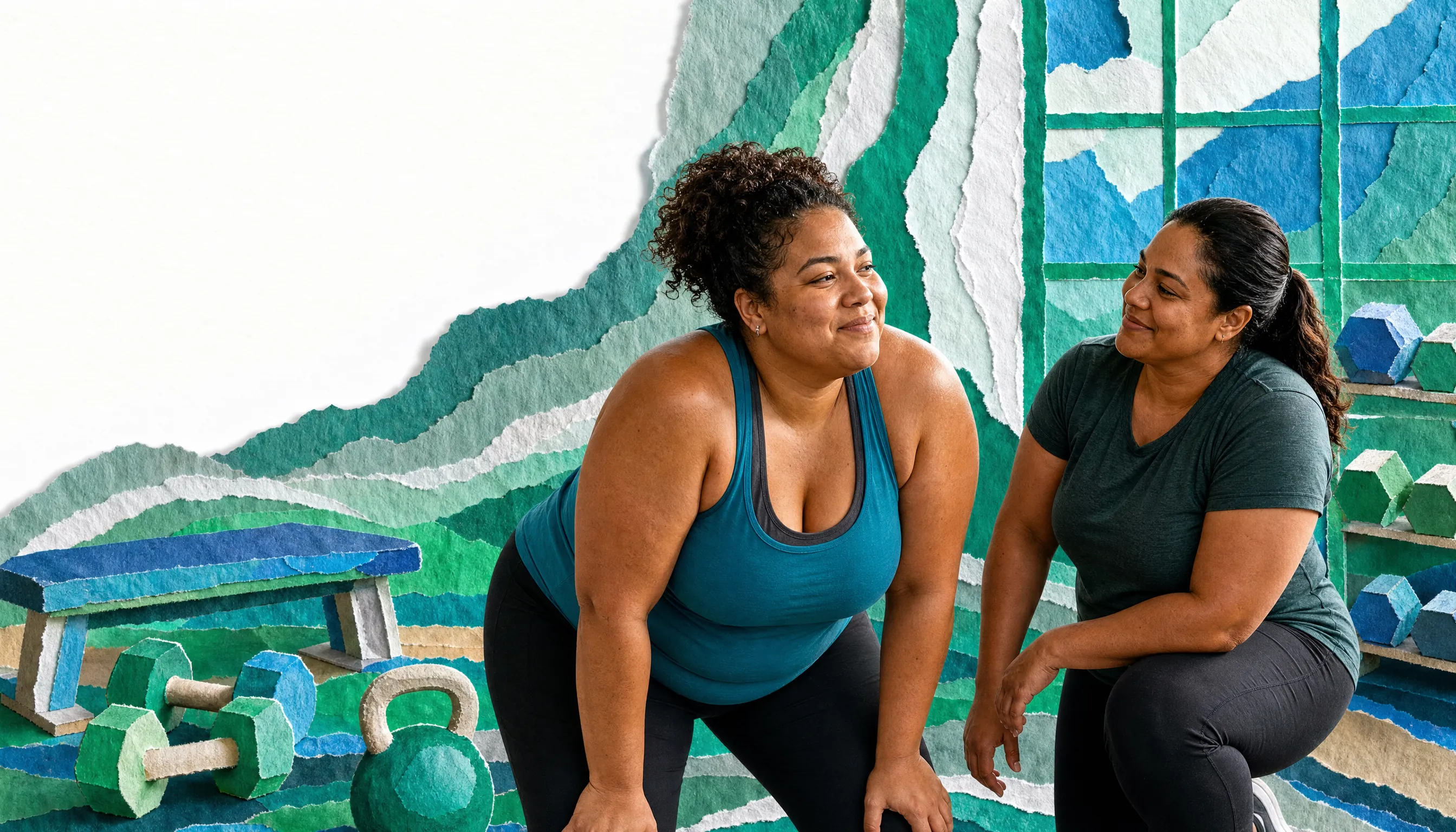
Strength work belongs on the list too, with one adjustment: choose weights or resistance bands that do not cause joint pain, and stop at the load the knee tolerates rather than the one you wrote down. What that work consists of and how often to do it is a separate question. Range-of-motion and stretching keep the joint limber, and balance and agility work is what keeps getting off a chair and off the floor inside your range.
What to raise with a clinician first
Raise the knee itself before you raise the plan. There is no single test for osteoarthritis; the assessment is a history, a physical exam of the problem joints, and x-rays or an MRI where they are needed. Blood tests and a sample of joint fluid are what rule out the other causes of a painful joint, among them infection and gout, and those change the answer completely.
Some knee behavior routes the appointment differently and is worth naming out loud. A joint that locks or gives out is the case an MRI is used to evaluate. A joint that is hot, or newly swollen with no new activity behind it, sends a clinician looking for infection rather than for wear.
Then raise the plan. Talking to a health care provider before beginning gets you recommendations built around your own joints, and people with arthritis may benefit from seeing a physical therapist when they begin. A physical therapist works on joint function directly; an occupational therapist teaches ways to protect a joint through an ordinary day; braces, shoe inserts and orthotics that a clinician prescribes and someone fits can steady a joint while you stand and walk. Medications, heat and cold sit on the same list of treatments, and none of them ranks below the walking.
Pick two, and keep them short
- Choose two activities off the joint-friendly list that you can reach without a drive.
- Start each at five minutes, and stop while the knee still feels the way it did when you began.
- Add difficulty in small amounts, and only once the current amount has stopped leaving next-day soreness.
- Write down what the knee did that evening and the following morning. That record is what a physical therapist reads, and nobody can reconstruct it for you afterward.
- Book an appointment for the knee itself if it locks, gives way, swells with no reason behind it, or is hot to the touch.
- Call sooner than planned if the pain from activity is severe, or if it is still building weeks in.
What is actually wrong inside the knee is settled by an examination rather than by a choice of activity. Put that appointment in the same week as the first five minutes rather than after them, and keep moving while you wait for it.